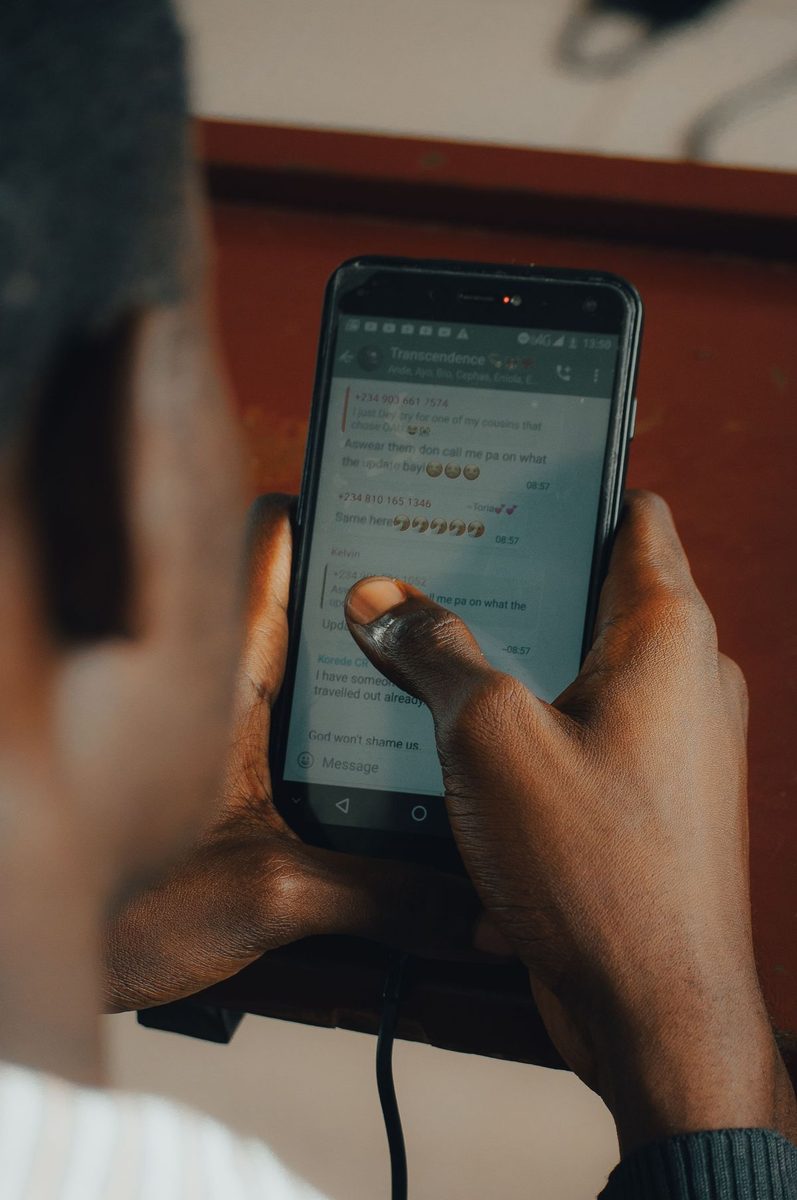
Three people on the same team each added the same Brazilian creator on WhatsApp, because each of them had a reason to. She received the same question three times in one afternoon, from three numbers she did not recognise, and answered none of them. The campaign did not fail because anyone was careless. It failed because creator communication had quietly moved to a channel with no shared record.
Every seller hits this at roughly the same size. The in-platform inbox works while the list is small and the person is one. Then message volume crosses a threshold, creators start answering somewhere faster, and the conversation fragments across four apps with no way to see who has already been told what.
This is written for the seller running one to three markets with two or three people touching creator messages, where at least one market answers on WhatsApp and the rest answer in a language nobody on the team reads fluently. If you have a single person handling everything, the problem has not arrived yet — it will when you hire the second.
The inbox is where the conversation starts, not where it ends
The in-platform message has one advantage nothing else replaces: it is attached to the creator’s account, so it survives a change of phone number and it is visible to whoever runs the campaign next quarter. That is a real property and it is why the record belongs there even when the conversation does not.
What it does not have is speed. A creator with several hundred unread requests treats the platform inbox the way anyone treats a crowded folder — she scans it when she has a reason to, not when a message arrives. Requests from shops she has never worked with sit in a queue behind the ones from shops she has. This is not rudeness, it is triage, and no amount of rewriting the subject line changes the queue.
The practical consequence is that creator communication has two layers whether you plan for it or not. The platform layer is the record. The messaging layer is where the answer actually arrives. Teams that pretend there is only one layer end up screenshotting WhatsApp into a folder, which is the most expensive possible version of both.
Why creators answer somewhere else faster
In Indonesia, Thailand, Vietnam and Brazil, WhatsApp is not a business tool the creator checks on a schedule — it is the phone. A message there is read in minutes because the app is where her family, her supplier and her friend are. An invitation that sits unread for four days on the platform gets an answer in an hour if it reaches her there, and the difference is not the wording.
That pattern is regional, not universal, and getting it wrong is common. Japan and South Korea lean on other apps entirely. Parts of the Philippines and Malaysia split between two or three. Building a channel strategy on the assumption that “creators use WhatsApp” produces a list that works in Jakarta and goes silent in Tokyo.
The other reason is volume. A creator who receives twenty shop invitations a week develops a filter, and the filter is usually applied at the notification level rather than by reading. Reaching her on a channel where she has not yet built that filter is the entire mechanism — and it is temporary, because the filter follows the volume.

What you give up when the conversation leaves the platform
The first thing lost is continuity. If the person who negotiated the commission leaves, the phone leaves with her, and the next person negotiates again from nothing. That is a business risk disguised as an administrative annoyance, and it compounds every time you hire.
The second is that nobody can see the state of a conversation they are not part of. Two people messaging one creator is the mild version. The expensive version is a creator being told a shipping date that contradicts the one in the platform record, and finding out only when she posts about it.
The third is compliance, and it is the one teams underestimate every time creator communication moves to a channel nobody is monitoring. Bulk messaging from a personal number is a pattern the platform treats as spam when it grows past what a person would plausibly send. Numbers get restricted, sometimes permanently, and the restriction usually arrives during the week you most needed the channel. Any plan that depends on a personal number has to assume that number can disappear.
A personal number and an API channel are different instruments
Most teams treat “WhatsApp” as one option and then discover it is two, with different failure modes. The table below is the comparison nobody writes down before choosing.
| Channel | Answer speed | Who can see the history | Main risk | Fits when |
|---|---|---|---|---|
| Platform inbox | Days, unless she is active | The whole team, permanently | Buried under other shops’ requests | Always, as the system of record |
| Once a day at best | The whole team, if you use a shared inbox | Read on a phone that filters promotions | Briefs, contracts, anything with an attachment | |
| WhatsApp personal number | Minutes | One person’s phone | Restriction when volume looks automated | Under about fifty messages a day, one owner |
| WhatsApp API channel | Minutes | The whole team, through the tool | Template approval and per-message cost | Volume, multiple senders, handover between staff |
The distinction that matters is not personal versus business. It is whether the history survives the person. A personal number is faster and cheaper until it is not, and the moment it stops being cheaper is the moment nobody can reconstruct what was promised.
DAMI runs both, which is less about offering two channels than about acknowledging that a team of three cannot share one phone. The personal-number send is for the small volume one person owns. The API send is for the volume where the record has to be shared, and where a restriction would cost more than the per-message fee.
Language is the part nobody budgets for
A seller in Guangzhou writing to creators in Jakarta, Bangkok and São Paulo is writing in a language she does not read. The usual workaround is machine translation pasted into the message, which works for the invitation and fails at the reply — because the reply is where the creator asks a question with a condition inside it, and a flat translation of a conditional is how a sample gets sent to someone who asked whether it was free.
The cost of this is invisible in the metrics and visible in the parcels. Messages that get answered are the simple ones. Messages that get ignored are usually the ones where the creator was not confident she had understood, and the fix is not a better translation engine — it is answering in her language within the same conversation, so she never has to guess twice.
DAMI translates the conversation in place, in the thread, rather than asking either side to leave and paste text elsewhere. That sounds minor until you have watched someone try to hold a four-message negotiation across two apps and a translation site, and lose the thread at message three.
The honest limit: translation handles logistics and it does not handle tone. A rejection delivered in flat translated text reads colder than intended, and in markets where the relationship carries the next campaign, that is a real cost. Keep the difficult messages for a person, and use the tool for the ninety percent that are dates, addresses and confirmations.
Where this sits in the wider chain
Creator communication is one stage of a longer workflow, and it is the stage that looks optional right up until the messages outgrow one phone. If the invitations themselves are the bottleneck rather than the conversation after them, the problem is upstream — the outreach chain from invite to posted video covers that half, and the map of all seven stages is worth reading if you are not sure which one is actually stuck.
The design principle underneath all of it is boring: every conversation should be readable by the team, in a language both sides understand, on a channel the creator actually checks. Where the record lives matters more than which app is fastest this quarter, because the app will change and the record is what you keep. The DAMI private-channel workspace is where both send types and the translated thread sit next to the creator’s platform record, so the two layers stop being two systems.
FAQ
Should we move all creator messaging to WhatsApp?
No. Keep the platform inbox as the record and use WhatsApp for speed, because the inbox is the only place the history survives a staff change and is visible to whoever inherits the account. Moving everything to WhatsApp trades a permanent record for a faster reply, and the trade only looks good in the quarter you make it.
Will a personal number get restricted?
It can, and the risk rises with volume and with how automated the sending looks. Under roughly fifty messages a day from one number, sent at human intervals, most teams never see a problem. Past that, the restriction tends to arrive without warning and during a week you needed the channel. Assume the number is disposable and keep the record somewhere else. DAMI pushes the volume through the API channel precisely so the personal number stays under the threshold where it stops being safe.
How many languages does a two-market seller actually need?
Two for the messages and one for the record. Write the platform record in the language your team reads, translate the creator communication into hers, and never let the translated version be the only copy. Creating an account starts you with one market, which is the right number to learn this on before the second one doubles the languages.