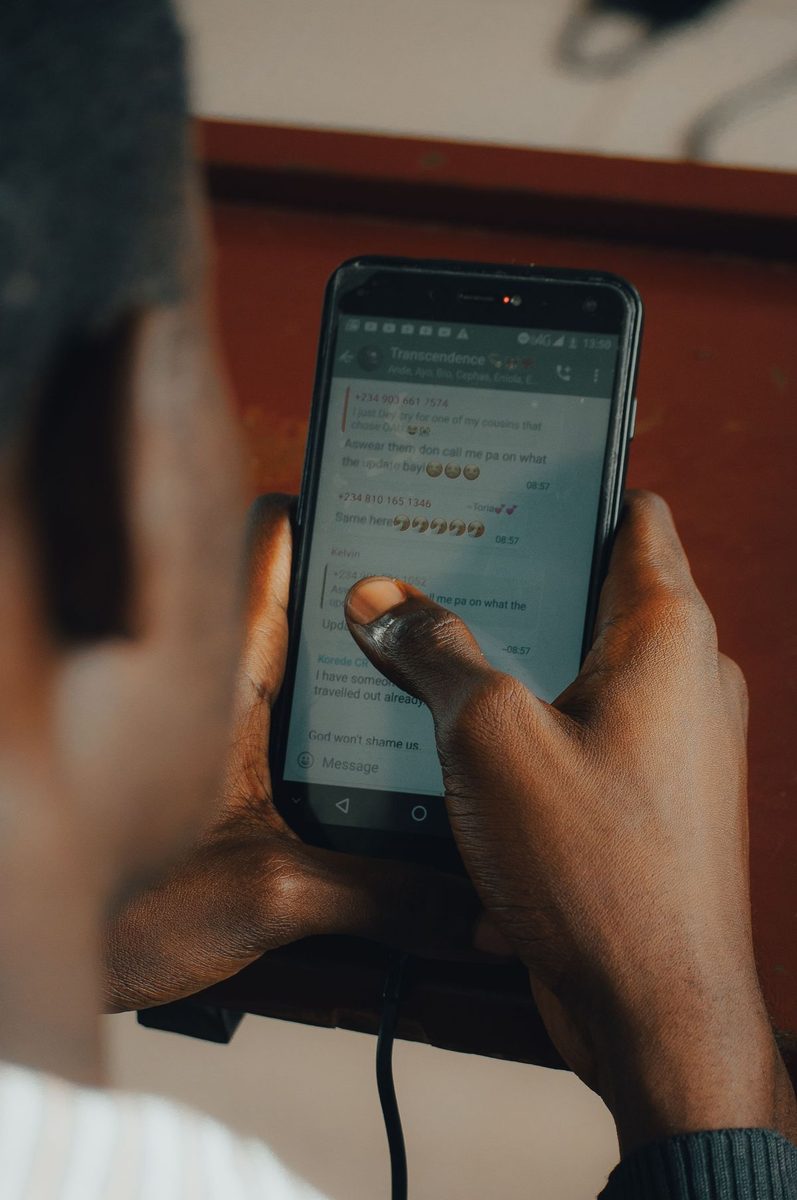
The personal number worked for two months. Two hundred messages into the third month it started getting limited, and the person running outreach began rotating SIM cards — a workaround that costs a morning every time it happens and leaves the conversation history scattered across numbers. Nobody had changed anything about the message; the volume had changed. This is what a WhatsApp business API broadcast is for, and it is not a message-quality problem.
A WhatsApp business API broadcast does not make the messages better. It removes the part where the channel itself becomes the job.
This is written for the seller whose creators answer on WhatsApp faster than they answer anywhere else — typically Southeast Asia, ten to thirty accounts, one or two people running outreach — and who has hit the point where a phone in someone’s hand is no longer a workable system. If you send fewer than a hundred messages a month, none of this applies yet.
Where the personal number stops working
Personal numbers are built for a person. They accumulate a reputation from everything that number has ever done, and they carry a hard dependency on a SIM, a phone and whoever is holding it that week.
Three things break in that arrangement, and they break in a predictable order. Volume first — a number used for outreach at scale starts getting limited, and the limit is not published anywhere you can plan against, which is exactly what makes it dangerous. Continuity second — when the person handling the number leaves or goes on leave, the number leaves with them, and the thread history goes with the number. Verification third — a personal presence has no way to prove it belongs to a shop, so a message from it competes with every other unverified number a creator has been messaged by that week.
A verified business number changes the second and third problems completely. It belongs to the shop rather than to an employee, and it presents as a business rather than as a stranger. On volume it changes the risk profile rather than the rules: fewer limits hit, and the ones that do arrive at a level where a shop sending to its own creators is not doing anything suspicious.
Which markets actually live in WhatsApp
Channel choice is a market question before it is a tooling question, and getting it wrong wastes the entire setup.
In Indonesia, WhatsApp is where the deal continues after the first reply — creators check it faster than shop inboxes, and negotiation moves there quickly. In Thailand, Line often carries that role instead, with WhatsApp as the secondary channel. In Vietnam, both appear, with the split depending on whether the creator works with cross-border shops. In the US, the pattern inverts: creators default to DMs and email, and a WhatsApp approach reads as slightly unusual unless the relationship already exists.
The practical rule: do not open a WhatsApp channel for a market where the creators are not already there. A broadcast that nobody reads is not a low-cost channel, it is a second inbox nobody monitors.
| Channel | Best at | Where it fails |
|---|---|---|
| In-platform message | Anything that must stay attached to the campaign | Volumes that exceed the platform allowance |
| Anything that needs a record, a template or a link | Open rates when the creator is not a heavy email user | |
| WhatsApp personal number | Fast back-and-forth with a creator already in contact | Volume, continuity when staff change, verification |
| WhatsApp business API | Repeat contact at volume from a shop-owned identity | Anything that needs a personal relationship to land |
What has to sit on the same screen as the broadcast
A broadcast is only as good as the list behind it, and the list degrades quietly.
Three things belong next to the send: who has already replied, which campaign they belong to, and whether their contact details are current. Without the first, the same creators get messaged twice and the second message reads as a system that is not paying attention. Without the second, a creator replying to the WhatsApp message has no context in the shop’s own records. Without the third, a third of the list is a number that no longer exists and the delivery rate looks like a content problem when it is a data problem. A WhatsApp business API broadcast against a stale list just fails more efficiently.
DAMI keeps WhatsApp alongside the in-platform thread and the email record against the same creator entry, and the API broadcast path runs on the shop’s verified number rather than an individual’s, so the two channels do not tell two different stories about the same person. That is the difference between a channel and a second place to lose information.

What this will not fix
Two limits, both worth stating before anyone buys the argument.
It does not make a cold list warm. A verified number gets read more often than an unknown one, but a creator who has never heard of the shop still has to be given a reason to answer, and no channel supplies that. DAMI changes how the message is received, not whether there is a reason to open it.
It does not replace the in-platform thread where the campaign lives. Anything that concerns an invitation, a sample or a commission belongs where the platform can see it; WhatsApp is for the conversation around the deal, not the deal itself.
FAQ
Do I still need the personal number if I have the API path?
For most teams, yes — at the start. A personal number is faster to set up and fine for the first conversations. The switch becomes worth it when volume rises or when more than one person needs to send from the shop’s identity.
Can I quote a daily sending limit?
Not honestly. WhatsApp does not publish a number that applies to a verified business number, and the limits that do exist depend on the account’s history and quality. Treat any figure you see online as someone else’s account, not yours.
Does this work for a creator who only gave an email?
No, and that is a data-entry decision rather than a channel decision. Contact details are optional on a creator profile apart from the email, so the WhatsApp number only exists in your system if someone asked for it. DAMI carries the number as an optional field on the creator record, which makes it cheapest to capture at import. Collecting it at first contact is cheaper than trying to source it later.
Check one thing before setting anything up: how many of your current creators have replied on WhatsApp in the last thirty days. If the answer is under a fifth, the channel is not the bottleneck. If it is most of them, broadcast lists that do not get you blocked is the sequence to read next, and comparing DM, email, chat and WhatsApp covers what each channel is actually good for. The DAMI private channel workspace is where the WhatsApp business API broadcast and the creator record sit together, or you can create an account and run the first list through it.