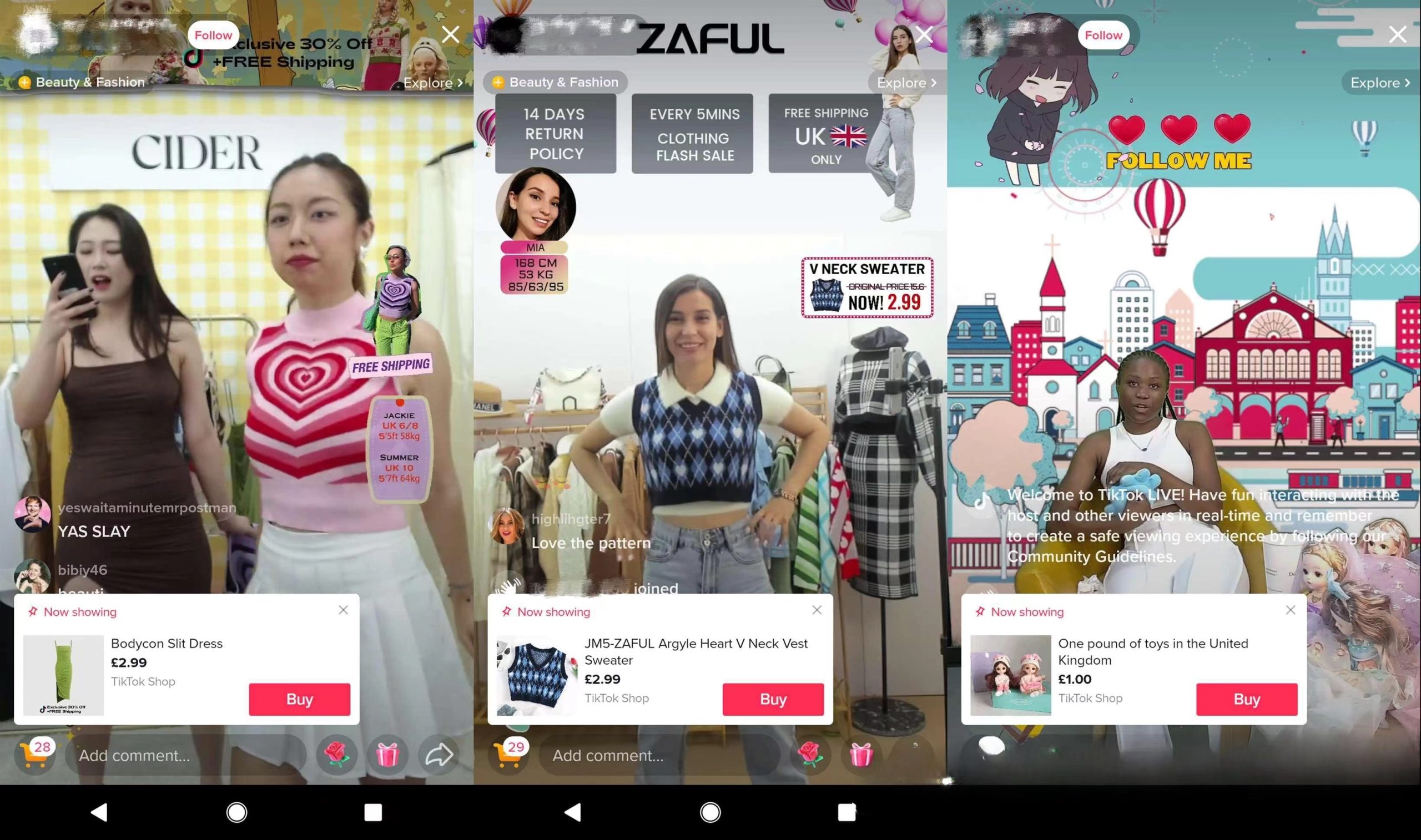
A $9.99 product sells 500 units in a week. The seller is excited about the volume. Then they do the math: at $9.99, with a 6 percent platform fee ($0.60), a 15 percent affiliate commission ($1.50), a $4.50 shipping cost, and a $3.00 COGS, the gross margin is $9.99 minus $9.60 = $0.39 per unit. At 500 units per week, the total weekly profit is $195. One returned order at that price point wipes out the profit from 20 units. A single damaged review costs more than the product’s margin Low-AOV selling on TikTok Shop is a high-volume, low-margin game that only works if the cost structure is optimized to the extreme
This article covers the specific strategies that make low-AOV selling profitable, and the traps that turn it into a losing proposition
Why low-AOV products are the most dangerous products on TikTok Shop
Low-AOV products (under $15) are attractive because they are easy to sell. The buyer’s purchase decision is almost frictionless: the price is low enough that the buyer does not need to deliberate. The conversion rate is high. The initial data looks good. But the unit economics are brutal because the fixed costs (shipping, platform fees, packaging) do not scale down with the price
A $9.99 product has the same shipping cost as a $29.99 product, but the shipping cost as a percentage of revenue is 45 percent for the $9.99 product versus 15 percent for the $29.99 product. The platform fee as a percentage of revenue is the same (6 percent), but the absolute fee is $0.60 versus $1.80. The affiliate commission as a percentage of revenue is the same (15 percent), but the absolute commission is $1.50 versus $4.50. The $9.99 product leaves $0.39 per unit before returns. The $29.99 product leaves $6.99 per unit before returns. The $9.99 product needs to sell 18 units to match the profit of one $29.99 unit. And the $9.99 product has a higher return rate because it attracts impulse buyers
Strategy 1: Bundle products to increase AOV
The most effective way to make low-AOV products profitable is to bundle them. A bundle of three $9.99 products sold as a set for $24.99 has a different cost structure. The shipping cost is the same as a single product (or slightly higher). The platform fee is $1.50 instead of $0.60 three times. The affiliate commission is $3.75 on the bundle instead of $1.50 three times. The total cost of the bundle is lower than the sum of three separate orders, and the buyer perceives the bundle as a better value
The bundle strategy works best when the products are complementary: a skincare set with a cleanser, a moisturizer, and a serum; a kitchen set with a peeler, a slicer, and a grater; a stationery set with pens, notebooks, and stickers. The buyer’s perceived value of the bundle is higher than the sum of the individual products, which allows the seller to price the bundle at a higher margin
Strategy 2: Use free shipping strategically, not as a default
Free shipping is the default expectation for many TikTok Shop buyers, but it is a profit killer for low-AOV products. If the shipping cost is $4.50 and the product is $9.99, free shipping consumes 45 percent of the revenue. The alternative is to charge for shipping: set the shipping cost at $2.99 to $4.99 and reduce the product price to compensate. The buyer sees the total price (product + shipping) and makes a purchase decision based on the total, not the split
The data shows that charging for shipping on products under $15 does not reduce conversion rate as much as sellers fear. The conversion rate drop is 5 to 15 percent, but the margin improvement is 30 to 45 percent. The net effect is that the seller makes more money per order, even with fewer orders
Strategy 3: Raise the price and add perceived value
A $9.99 product that sells well can often be sold at $14.99 or $19.99 with a slight improvement in packaging, a better product description, or a bundled accessory. The conversion rate drop from a 50 percent price increase is typically 20 to 30 percent, but the margin improvement is 200 to 300 percent. The seller makes more profit at the higher price with fewer units
The key is to add perceived value that justifies the higher price. A $9.99 product that comes in a plain bag can be sold at $14.99 if it comes in a branded box with an instruction card. A $9.99 product with a generic description can be sold at $14.99 if the description has detailed specifications, high-quality images, and customer testimonials. The perceived value increase does not require a significant cost increase — it requires a presentation upgrade
Strategy 4: Discontinue the products that cannot be improved
Some low-AOV products are unprofitable at any price within the competitive range. A $5.99 product with a $4.00 COGS, a $4.50 shipping cost, and a 20 percent return rate is structurally unprofitable. The fix is to discontinue the product and replace it with a higher-margin alternative. The decision to discontinue a low-AOV product is not a failure — it is a recognition that the product’s cost structure does not fit the TikTok Shop selling model
Most sellers have 3 to 5 low-AOV products in their catalog that are unprofitable. The instinct is to keep them because they generate revenue. The discipline is to discontinue them and focus on products that have a healthier margin profile

Frequently asked questions
What is the minimum price point for a profitable TikTok Shop product
For most sellers, the minimum profitable price point is $15. Below $15, the fixed costs (shipping, platform fees, commission) consume too much of the revenue. The $15 threshold assumes a reasonable COGS (under $5) and a return rate under 15 percent
Should I use quantity discounts to increase AOV
Yes, but carefully. Quantity discounts (“buy 2, get 10% off”) increase AOV without increasing the cost structure significantly. The discount should be no more than 10 to 15 percent to preserve the margin. Higher discounts eat into the margin improvement from the higher AOV
How do I test a price increase without losing all my customers
Test the price increase on a single product for 7 days. Monitor the conversion rate and the net profit. If the conversion rate drops by less than 20 percent and the net profit increases, the price increase is working. If the conversion rate drops by more than 30 percent, the price increase is too aggressive
Is it worth selling low-AOV products if they are loss leaders for other products
Yes, if the low-AOV product drives sales of higher-margin products. The loss leader should be measured by its contribution to total store profit, not its individual profit. If the loss leader generates $1 in loss but drives $5 in profit from other products, it is worth keeping