TikTok Shop Creator Marketing UK: Tiers, Commission Rates, and How to Brief UK Creators
A creator list that produced your best month in the US or Southeast Asia is close to worthless as a starting asset for TikTok Shop creator marketing UK. Not because the creators are weak — because almost nothing that made them work survives the move. The L-level next to their name is calculated per market. The payment they expect is not what your US contract template offers. And a British audience can hear an imported script inside two seconds.
Nobody budgets for that last one. Sellers arrive with a working playbook and a list of creators who have already converted. The UK shop opens, the same names get invited, GMV stays flat, and the failure gets filed as “UK creators don’t convert.” It is narrower than that, and more fixable.
What follows covers the decisions that move a UK programme: which L-tier deserves budget, what commission band to set, what a UK creator needs in a brief — then the ASA and CAP position.
TikTok Shop Creator Marketing UK: The Market in Numbers, Tiers, and Where Volume Sits
The UK has the most developed affiliate creator market in Europe. More than 200,000 creators were registered in the UK affiliate marketplace as of August 2026, from micro-creators at the 1,000-follower entry threshold to L7 affiliates above £1,500,000 in monthly GMV.
Scale is not the problem. Selection is.
How the L1–L7 tiers are calculated
Levels run L1 to L7, calculated on trailing 30-day GMV — the attributed shop sales a creator drove. Nothing else feeds it: not followers, not views, not account age.
The detail that breaks cross-market planning: the level is calculated per market. A UK level reflects UK GMV; a US level reflects US GMV. So the first task in TikTok Shop creator marketing UK is re-screening your imported list against the UK level in Affiliate Center.
Why L1–L2 is the volume play and L3+ is the premium play
L1 and L2 hold the volume: numerous, responsive, willing to work on commission alone. That makes them the base for seeding at scale and learning which hook converts in the UK.
L3 is scarce and, for most UK programmes, the best value in the market. Published estimates of the L3+ population disagree sharply — one source puts it near 1,900 of more than 600,000 registered creators, another nearer 8,000. Treat it as a range in the low thousands and verify against live Affiliate Center data. L3 creators also frequently expect a paid element on top of commission.
The Creator Level badges (Bronze → Diamond) and what they do and do not tell you
Creators also carry a level badge, Bronze through Diamond, tracking progression and platform activity. It says nothing about category fit — a Diamond badge tells you nothing about beauty, womenswear or wellness. Use the L-tier to select.
Build the UK tier plan before the rate card. Fix the split between L1–L2 volume, L3, and the tentpole moments worth paying L4+ for. Screening a UK L1–L2 pool by market and category by hand is slow — DAMI’s 8M+ creator pool plus tier-level commission turns it into an afternoon.
| Tier | Monthly GMV (UK) | What it is | How to work with them |
|---|---|---|---|
| L1 | £0–£5,000 | Largest pool. New or lightly active. | Open plan, commission-only, sample-gated. |
| L2 | £5,000–£25,000 | Proven conversion, still accessible. | Core of UK volume. Targeted invites. |
| L3 | £25,000–£60,000 | Scarce, best value. Proven converters. | Flat fee plus commission. Best ROI. |
| L4 | £60,000–£150,000 | Established, selective, often represented. | Negotiated fee. Reserve for launches. |
| L5 | £150,000–£400,000 | Top-tier talent, serious monthly volume. | Bespoke terms, longer lead times. |
| L6 | £400,000–£1,500,000 | Elite, effectively full-time sellers. | Bespoke, multi-quarter, agency-mediated. |
| L7 | £1,500,000+ | Top of the UK market. Very few. | Strategic partnership, not a booking. |
L-tier bands are calculated on monthly GMV and separately for each market, so a UK level reflects UK sales only.

UK Commission Rates by Category: How to Read Conflicting Benchmarks
There is no single correct UK commission number — there is a working band you can verify against your own cost stack. That is why two published tables can both be defensible and still disagree by five points. If you are staring at two conflicting rate cards for TikTok Shop creator marketing UK, the answer is not to pick one. It is to understand the divergence and set your own.
Why two published benchmark sets disagree
Three mechanisms produce nearly all of the gap.
- Timing. UK rates trended upward through 2025 and into 2026. Two tables compiled a year apart disagree even if both were accurate when written.
- What is measured. One set captures the rate brands run on proven products; another captures the elevated launch-window rate. Real, but not a steady-state number.
- Category boundaries. Beauty, health and home get drawn differently by different sources. Whether a supplement sits in health or food and drink moves it across a five-point range.
Treat any published percentage as a signal about the market, not a setting for your shop.
The cost stack behind a commission number
Creator commission stacks on top of the UK platform commission, and comes out after product cost, fulfilment and a returns allowance.
Published UK platform rates conflict too. One schedule puts most categories at 9%, raised from 6% in January 2026 and inclusive of VAT, with a reduced 5% for eligible electronics and beauty and personal care lines. A second describes beauty, health and fashion at 9% and electronics and mother-and-baby at 6%. Neither is your number — check the rate shown against each SKU in Seller Center.
The full stack is product cost, platform commission, fulfilment, returns allowance, creator commission, then paid amplification. Thin gross margin means a low commission ceiling whatever the benchmark says. DAMI’s shop analytics put a candidate rate into that stack for your actual SKUs.
Setting a launch rate and a compression path
The mistake is setting a rate and leaving it. The workable UK pattern is to open at the top of the band to buy content volume, then compress once creators find you without an incentive premium.
In beauty and personal care: open at 15–20% to build the first UK cohort and learn which hook holds completion, then step to 10–12% once conversion data exists. Move in steps of two or three points, with notice.
| Category | Benchmark set A | Benchmark set B | Suggested working band |
|---|---|---|---|
| Beauty & personal care | 15–25% | 10–20% | 15–20% at launch, compress to 10–12% |
| Fashion & apparel | 15–20% | 10–15% | 12–18% |
| Health & wellness | Not reported | 8–15% | 10–15% |
| Home & living | 10–15% | 5–10% | 8–12% |
| Electronics & gadgets | 8–12% | 2–8% | 5–10% |
| Food & drink | 10–15% | Not reported | 10–15% |
| Toys & games | Not reported | 10–15% | 10–15% |
Bands are indicative ranges for the UK market, not fixed rates. Creator commission is charged in addition to the platform commission shown against each SKU in Seller Center.
How UK Creators Expect to Be Worked With: Brief, Terms, and Rights
Everything here is commercial convention, not platform rule. TikTok Shop does not set your payment terms, usage rights or brief format with a UK creator. Those are agreements between you and them, and the binding version is what you both sign.
The written brief: what UK creators expect before they say yes
UK creators at L2 and above expect a written brief, not a DM saying “let me know if you want to collab” — short enough to read on a phone, specific enough to decide in one pass whether the product fits.
- Positioning in one or two sentences — what it is, who for, why it is worth a video.
- Two or three optional angles — review, before-and-after, problem-solution, demo or comparison. Angles instead of a script is the difference between a brief and a straitjacket.
- Hook examples the creator can take or leave. UK creators respond badly to full scripts.
- Hard do and don’t claims — where most UK compliance risk originates.
- Deliverable count and posting window.
- Disclosure, written as a deliverable rather than a legal footnote.
They also expect commercial context: which product converts, which hook holds completion, realistic order volume. That expectation is why TikTok Shop creator marketing UK cannot run on a US brief template.
Payment terms and invoicing norms
For flat-fee work, UK B2B payment terms commonly sit in the region of 30 days. Treat that as a negotiating reference only — not a standard, and not something the platform guarantees. TikTok Shop does not set or enforce payment terms between you and a creator; the binding number is in the written agreement.
Be explicit about what triggers payment: posting, delivered GMV, or both.
Rights clauses that need to be explicit before you brief
Four things need settling in writing before filming starts: paid usage rights and duration; territory; which accounts can use the content; and editing or derivative use, including whether off-platform use is priced separately.
How you obtain and manage authorisation to run spend against creator content is its own subject. For the brief: agree the rights before the content exists.
ASA and CAP Disclosure Rules for UK TikTok Shop Creator Content
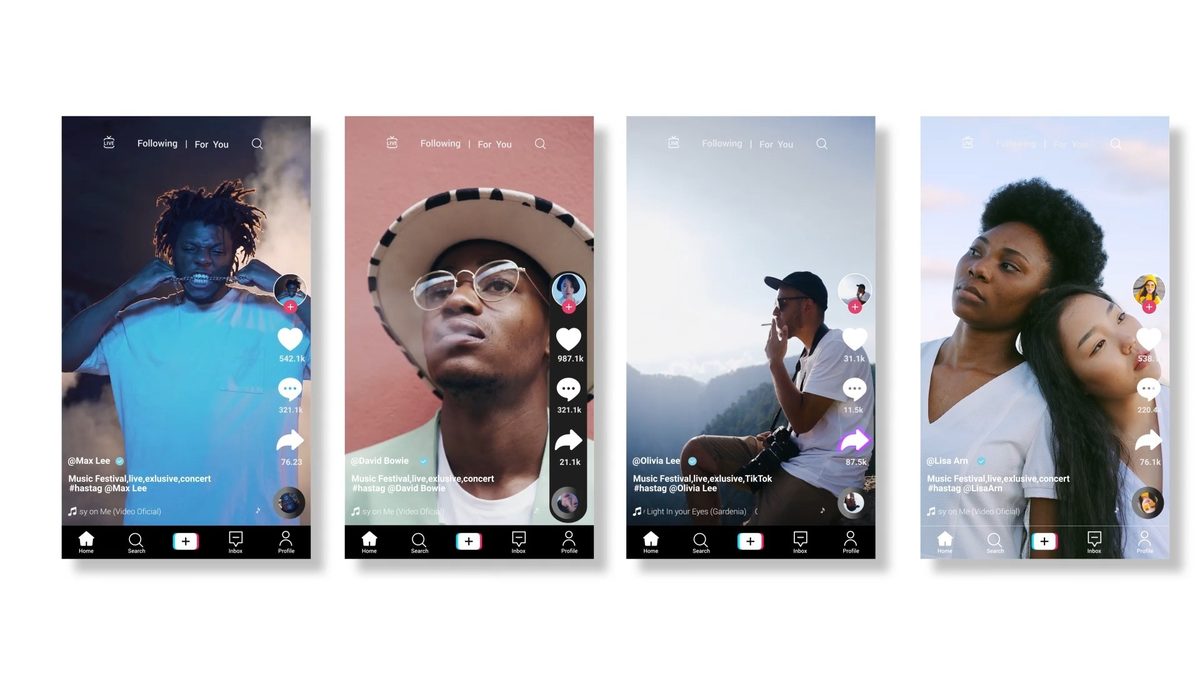
Yes. A commission relationship is a material connection under the CAP Code, so UK creator content promoting your TikTok Shop needs an Ad label, and a paid partnership toggle on its own is not enough. Both the brand and the creator carry responsibility, and adding #ad after a complaint does not cure the original breach.
This is the section UK sellers skip most often. The ASA enforces the CAP Code, which applies in full to non-broadcast media including social content aimed at UK consumers.
What counts as a material connection
Section 2 of the CAP Code requires marketing communications to be obviously identifiable as such, and advertorials to be clearly marked. From 6 April 2025 the legal underpinning for Section 2 moved from the Consumer Protection from Unfair Trading Regulations 2008 to the Digital Markets, Competition and Consumers Act 2024.
A commission relationship is a material connection. So is a gifted product, a discount code, a free trip or any other incentive. The ASA’s position is that affiliate content is likely to be advertising whether or not the brand had editorial control.
Ad, Advert, Advertising and Advertisement satisfy the rule. On their own these do not: affiliate, #aff, sponsored, collab, gifted, #gifted, brand ambassador, an @-mention or a discount code. ASA research found understanding of “affiliate” too low for it to work.
Where the label has to sit
Placement is the most common failure point — a failure of position, not wording.
- Caption: #ad at the very front, visible without tapping “more.” Buried in a hashtag string, or below the fold line, it still fails.
- Video: an on-screen Ad label in the opening frames, or spoken in the first few seconds. The video description alone is not enough.
- Platform tools: the paid partnership tag helps, but treat it as supplementary and pair it with a written Ad label.
ASA monitoring of UK influencer content in 2024 found around 57% of influencer ads met the disclosure rules, 9% used a label that failed to make the commercial nature clear, and 34% carried none. Most poorly disclosed ads were in fashion and travel — one more reason disclosure belongs in the brief for TikTok Shop creator marketing UK, not in a post-publication check.
Who carries the liability — both brand and creator
Both. Brand and creator are each responsible under the Code, including where the creator produced the content alone and the brand had no editorial control.
So failing to brief the requirement is a failure in itself, and failing to check before publication is a second one. The fix is a pre-publication review step, not a take-down process — a breach is assessed at the moment of publication, so adding #ad later does not cure it.
What changes when you boost a creator post as an ad
Putting paid spend behind a creator’s post makes it a marketing communication originating from your brand. You carry the Section 2 responsibility directly, and the disclosure has to stay visible across every served version of the ad — not just the organic post.
That is the trap when boosting a winning UK creator video: the organic version carries #ad at the front of the caption, the boosted variant crops it or renders it off-screen, and the paid version is what gets complained about. Check the label in the ad preview.
Why Creator Rosters Validated in Other Markets Underperform in the UK
If you are still weighing whether to enter the UK at all, that is a separate decision — our TikTok Shop market expansion decision framework covers it. Everything below assumes the UK shop is live or in onboarding.
Six causes account for most cross-market disappointment.
- Tier not portable — re-screen by UK level
- Imported tone — let UK creators write hooks
- Payment mismatch — add flat fee at L3+
- Format mismatch — short video first, LIVE second
- Disclosure resistance — make it a deliverable
- Entry threshold — check affiliate eligibility first
Tone and script: the “US swipe file” problem
American swipe-file phrasing does not survive contact with a UK audience. “Obsessed,” “run don’t walk,” “you need this” — the register is wrong, and it reads as advertising before the viewer registers the product. UK creators notice immediately and quietly rewrite it.
The fix is not to write UK-sounding copy yourself. Hand over the angles and let the creator write the hook: you supply the product truth and claim boundaries, they supply the voice. Markets where high-energy selling language performs well, much of Southeast Asia among them, behave differently — see our Southeast Asia creator marketing playbook.
Payment expectation mismatch
Commission-only works at L1–L2 in the UK. Above that it increasingly does not. If L3+ outreach goes unanswered, assume the commercial structure is the problem before assuming the product is.
The standard UK shape at L3 and above is flat fee plus commission — the fee covers production, the commission covers performance.
Tier portability: a US L4 is not a UK L4
Levels are calculated on each market’s own trailing 30-day GMV, so a creator at L4 in the US can be L1 or L2 in the UK, or have no meaningful UK commerce history. Their audience is also largely not UK-based.
Re-screen by UK level, then check two things before inviting: shoppable content in the last 30 days, and an audience that skews UK.
Disclosure resistance and how to frame it
Some UK creators resist #ad because they believe it damages authenticity. The framing that works is not legal. It is that disclosure is respect for the audience — consistent with the trust they have built.
Put it in the brief as a deliverable with a worked example: the exact label and position, and a screen grab of a correctly labelled post.
| Failure cause | What you see | The fix |
|---|---|---|
| Tier not portable | Strong on paper, no UK GMV | Re-screen by UK level in Affiliate Center |
| Imported tone | Views fine, conversion poor | Supply angles, let the UK creator write the hook |
| Payment mismatch | L3+ do not reply or decline | Offer flat fee plus commission at L3+ |
| Format mismatch | LIVE-heavy plan underdelivers | Short-form video first, UK LIVE as increment |
| Disclosure resistance | Label stripped or post late | Write disclosure into the brief as a deliverable |
| Entry threshold | Invited creators cannot join | Confirm UK affiliate eligibility, including follower minimum |
Building the UK Roster: A Working Sequence
Sequencing matters more than cohort size in TikTok Shop creator marketing UK. A programme that starts wide tends to burn its sample budget before it learns anything.
Start with targeted, not open
Open plans generate application volume and very uneven quality. The common pattern: 200 samples sent, 40 creators post, eight produce meaningful sales.
Start with a Targeted Plan instead — a defined invite list, controlled samples, and a clean read on which creator profile converts for your product in the UK. DAMI’s competitor and competitor-store discovery builds the first target list from creators already selling in your category and in adjacent UK shops, and managed outreach handles the targeted invitations and follow-up UK creators expect.
Sample-to-video conversion as the health metric
Track samples sent against videos posted. A 30–40% sample-to-video conversion rate is the healthy band. Below 30%, tighten selection; above 40%, widen.
Two rules keep the number healthy: only send samples to creators who already post commerce-style content, and check recent shop activity rather than main-feed aesthetic. DAMI tracks sample-to-video conversion inside the same dashboard your team uses to review tier structure and posting cadence.
Feed authorized winners into paid
Once a creator video converts organically, the next move is to put spend behind it. That needs the usage rights agreed in the brief and the correct authorisation in place. The authorisation mechanics — codes, bulk authorisation, and how they interact with paid amplification — are covered separately. Rights and authorisation have to be settled before the video wins, not after.
Where a Creator Operations Platform Fits into TikTok Shop Creator Marketing UK
The failure mode of a UK creator programme is rarely strategy. It is the volume of small decisions: which of 200,000 registered UK creators to invite, what rate to set per tier, whether the label sits in the right place.
A dedicated creator management platform for TikTok Shop keeps those decisions consistent across a roster instead of living in one person’s head and a spreadsheet that is already out of date.
The jobs worth platforming, in the order a UK programme hits them:
- Screening a large creator pool by UK market, category and UK L-tier, rather than working from a list imported from another shop.
- Invitation and follow-up — Targeted Plan invites, sample dispatch, and the sequence that decides whether a creator posts at all.
- Plan and rate management — switching products between Open and Targeted, and running tier-specific commission without editing each SKU by hand.
- Health reporting — sample-to-video conversion, tier mix and posting cadence in one view, so drift shows up before it shows up in GMV.
- Cost visibility — commission set against the real cost stack, including the UK platform rate charged on each SKU.
DAMI covers that set for UK sellers: an 8M+ creator pool, competitor-based discovery, managed outreach, sample tracking, Open and Targeted plan management with tier-level commission, shop-level analytics, and a shared team dashboard. It is infrastructure for running the roster, not a substitute for knowing which UK tier to buy.
Where to Start This Week
The order of operations for TikTok Shop creator marketing UK is short: re-screen the roster by UK level, set a launch rate at the top of your category band with a compression path written down, put disclosure in the brief as a deliverable, and start targeted rather than open.
None of those need a bigger budget. They need accepting that the UK is a separate market with its own tier maths, payment expectations and disclosure regime.
Start with thirty UK L1–L2 creators in a single category. One category, one rate, one brief format, one measured sample-to-video number. That gives you the data to justify going up-tier.