Most TikTok Shop sellers manage creator content and search ads as if they are two separate campaigns run by two separate teams. Creator content is handled by the partnerships team. Search ads are handled by the performance marketing team. The two never talk to each other. The result is that the demand created by creator content evaporates because no search ad is ready to capture it. This article is about closing that gap. Creator content and search ad synergy is the practice of aligning your organic content engine with your paid search strategy so that each one feeds the other. When done correctly, creator content generates demand and search ads convert that demand into sales, creating a compounding effect that neither channel achieves alone.
The Core Problem: Why Creator Content and Search Ads Are Managed Separately
The separation between creator content and search ads is not intentional. It is structural. Creator partnerships are usually managed by a social or influencer marketing function. Search ads are managed by a performance marketing or paid media function. These teams often report to different managers, use different tools, and measure success with different metrics. The content team measures views, engagement, and creator output. The ad team measures click-through rate, cost per click, and return on ad spend.
The consequence of this separation is that creator content is evaluated only on direct sales, and search ads are evaluated only on direct conversions. Neither team sees the full funnel. When a creator video generates 100,000 views and drives 500 direct sales, the content team is satisfied. But what about the 99,500 viewers who watched the video and did not buy? Some of them will search for the product later. If no search ad is running to capture that search demand, those potential sales go to organic results, competitors, or are lost entirely.
If the goal is to maximize the value of every creator video, then the search ad strategy must be designed to capture the demand that creator content creates. If you are running creator content and search ads independently without any coordination, you are leaving the most valuable part of the funnel unattended.
The Synergy Funnel: How Creator Content Feeds Search Ads
To understand the synergy, you need to understand the funnel. Creator content sits at the top of the funnel. It generates awareness and interest. A viewer watches a creator demonstrate a product and thinks, this is interesting, but I am not ready to buy right now. They do not click through. They keep scrolling. Three days later, they are still thinking about the product. They go to TikTok search or Google and type in the product name. This is where the search ad should be waiting.
The synergy funnel works in four stages:
| Funnel Stage | Channel | Goal | Timing |
|---|---|---|---|
| Awareness | Creator content | Introduce product to audience | Week 1 |
| Interest | Creator content | Build desire through demonstration | Week 1 |
| Intent | Organic search | Viewer searches for product | Week 2 |
| Conversion | Search ads | Capture search demand | Week 2 |
The key insight is timing. Creator content published in week 1 generates search demand that peaks in week 2. If your search ads are not active during week 2, you miss the peak. If your search ads are active but not targeting the right keywords, you miss the intent. The synergy requires both channels to be active and aligned within the same window.
If the goal is to capture the full demand cycle, then your search ad schedule should lag your content publication by one to two weeks. If you are running a short flash campaign, the lag may be shorter, but the principle remains: search ads should follow content, not run in parallel without coordination.
Using Top-Performing Creator Videos as Ad Creative
The most direct form of synergy is using creator content as ad creative. When a creator video performs well organically, it is a proven asset. The audience has already voted on it with their attention. Taking that same video and running it as a paid ad is not a guess. It is an amplification of a known winner.
This requires one critical element: content rights. You need explicit permission from the creator to use their video in paid ads. This should be negotiated upfront in the creator agreement. If you did not secure ad usage rights, you cannot legally run the video as an ad. The cost of securing ad rights varies, but it is typically an additional 20 to 50 percent on top of the content fee. If the goal is to build a library of ad-ready content, then ad rights should be a non-negotiable term in every creator agreement.
Once you have the rights, the process is straightforward. Identify the top-performing creator videos based on organic engagement and conversion data. These are your ad creative candidates. Test them as search ads with a modest budget. The videos that performed well organically will typically outperform custom-produced ad creative because they have already been validated by a real audience.
If the goal is to reduce ad creative production costs, reusing top creator videos is the most efficient approach. If you are producing custom ad creative in addition to creator content, then the creator videos should be tested alongside the custom creative. Often, the creator version wins.
Aligning Content Publication with Ad Campaign Timing
The calendar is where synergy lives or dies. If creator content is published on an unpredictable schedule and search ads are running on a fixed schedule, the two will rarely align. The solution is to build a unified content and ad calendar that coordinates publication dates with ad activation dates.
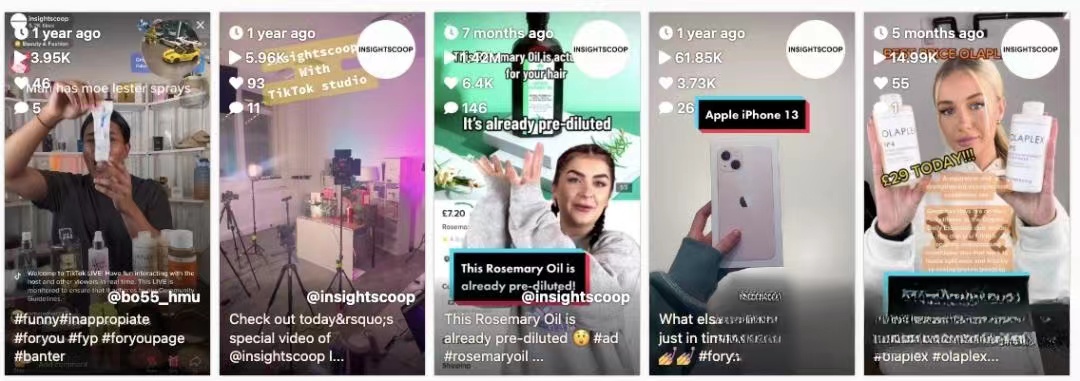
A practical calendar looks like this. Week 1: Creator publishes video for Product A. Week 2: Search ads for Product A go live, targeting branded keywords and product-related terms. Week 3: Creator publishes a second video for Product A, this time a different format or angle. Week 4: Search ad budget increases to capture the combined demand from both creator videos.
This staggered approach means search ads are always running when search demand is highest. The creator content creates the demand, and the search ads capture it. Without this alignment, you might run search ads in week 1 when there is no search demand yet, and you might publish creator content in week 3 when there are no search ads to capture the demand it creates.
If the goal is to maximize the efficiency of both channels, the content calendar and the ad calendar should be built together. If you are managing a single product with one creator, the coordination is simple. If you are managing multiple products across multiple creators, the calendar becomes more complex but also more important.
How Creator Content Builds Branded Search Demand
One of the most underappreciated effects of creator content is its impact on branded search volume. When a creator posts a video about your product, some viewers will later search for the product by name. This is branded search demand, and it is one of the most valuable forms of intent because the searcher already knows what they want.
The challenge is that branded search demand is invisible until it appears. You cannot predict exactly when it will spike. But you can monitor it. Track your branded search volume on TikTok and Google Trends. When you see a spike that correlates with a creator post, you know the content is driving search behavior. This is the signal that your search ads need to be active.
| Content Type | Typical Branded Search Lift | Peak Timing | Best Ad Response |
|---|---|---|---|
| Viral creator video | Significant spike | 48 to 96 hours post-publish | Increase search ad budget immediately |
| Standard creator video | Moderate increase | 3 to 7 days post-publish | Maintain search ad presence |
| Live shopping session | Spike during and after live | During live and 24 hours after | Maximize search ad spend during live |
| Multiple creators same week | Compounded search lift | 5 to 10 days post-publish | Scale search ads for 2 weeks |
If the goal is to capture branded search demand, then monitoring search volume after creator posts is essential. For more on how live shopping sessions create search demand, you can explore creator live shopping to understand the timing and intensity of demand spikes during live events.
Retargeting Users Who Engaged with Creator Content
The most direct synergy between creator content and search ads is retargeting. When a user engages with a creator video, whether by watching it to completion, liking it, commenting, or sharing, they are signaling interest. This interest can be captured by retargeting those users with search ads or feed ads that feature the same product.
The retargeting strategy works as follows. First, identify users who engaged with your creator content. TikTok’s ad platform allows you to create custom audiences based on video views, engagement, and other interactions. Second, serve these users search or feed ads that reinforce the product they saw in the creator video. Third, use the creator video itself as the ad creative for retargeting, if you have secured ad rights.
The reason retargeting works is that the user has already been exposed to the product through the creator content. They are not seeing it for the first time in the ad. They are seeing it again, and repetition builds familiarity. The conversion rate on retargeted users who previously engaged with creator content is significantly higher than on cold ad audiences.
If the goal is to maximize conversion rates on your ad spend, retargeting engaged creator content viewers is the highest-ROI tactic available. If you are not retargeting, you are paying for creator content to generate interest and then letting that interest dissipate without a follow-up touchpoint.
Budget Allocation: How Much to Spend on Ads vs Creators
The budget question is straightforward. If you spend a certain amount on creator content, you should plan to spend a proportional amount on search ads to capture the demand that content creates. The exact ratio depends on your product, margin, and conversion rate, but a reasonable starting point is to allocate at least 50 percent of your creator budget to retargeting and search ads.
For example, if you spend $10,000 on creator content in a month, plan to spend at least $5,000 on search ads and retargeting in the same month. This is not an arbitrary ratio. It is based on the principle that creator content generates demand that is worth capturing, and if you do not capture it, the creator spend is partially wasted. If your product has a longer consideration cycle, the ad budget should be higher because the demand window is longer. If your product is an impulse buy, the ad budget can be lower because the creator content alone may close the sale.
If the goal is to build a sustainable content-plus-ad engine, the budget should be planned as a single pool. If you are running a test campaign with limited budget, you can start with a smaller ad allocation, but monitor search volume closely. If search volume spikes after creator content goes live, increase ad spend immediately to capture it.
When Synergy Works and When It Does Not
Not every product benefits from the creator content and search ad synergy model. Understanding when it works and when it does not is critical to allocating budget correctly.
Synergy works best for products with longer consideration cycles. These are products where a consumer sees the content, thinks about it, and searches for it later. Examples include electronics, home goods, beauty products with multiple ingredients, and anything priced above impulse-buy territory. For these products, the time lag between content exposure and purchase decision is where search ads capture demand.
Synergy does not work well for impulse purchases. If a product is priced low enough that the creator content alone closes the sale, there is no search demand to capture. The viewer watches the video and buys immediately. Search ads in this scenario add cost without incremental value. For these products, invest more in creator content volume and less in search ads.
Synergy also does not work when the creator content is not generating search behavior. If your creator videos are getting views but no one is searching for the product by name afterward, it means the content is not creating strong enough intent. This is a content problem, not an ad problem. Fix the content first, then build the synergy.
If the goal is to decide whether to invest in search ad synergy, look at your product’s consideration cycle. If the cycle is longer than 24 hours, synergy will add value. If the product sells on impulse within the first view, invest in more content instead. If you are unsure, run a test: publish creator content, monitor branded search volume for one week, and if search demand appears, activate search ads to capture it.
Creator content and search ad synergy is not about spending more. It is about spending in the right sequence. Creator content first, search ads second, retargeting third. When these three are aligned in time and message, each dollar spent on creators makes each dollar spent on ads more effective. That is the definition of compounding returns, and it is the strategy that separates sellers who scale from sellers who plateau.