Twelve creator accounts, one snack launch, two people in Kuala Lumpur. The video got shot properly. The TikTok Shop photo post was an afterthought — four images of the same bag on a white table, pushed to three accounts, then abandoned. Six weeks later the video was past forty thousand views and the photo post had nine hundred, and nobody on the team could say whether that was the format losing or the images being four of the same thing.
It was the second one. A photo post is a sequence, and four near-identical frames give a reader nowhere to go after the first swipe. The format rewards a different kind of planning than video does, and the planning happens before you open the publishing screen.
This is written for the small cross-border team — five to fifteen creator accounts, ten to fifty SKUs, two or three people doing sourcing, posting and review — where photo posts are the cheap second channel and nobody has time to build a proper sequence from scratch each launch.
Thirty-five images is a ceiling, not a target
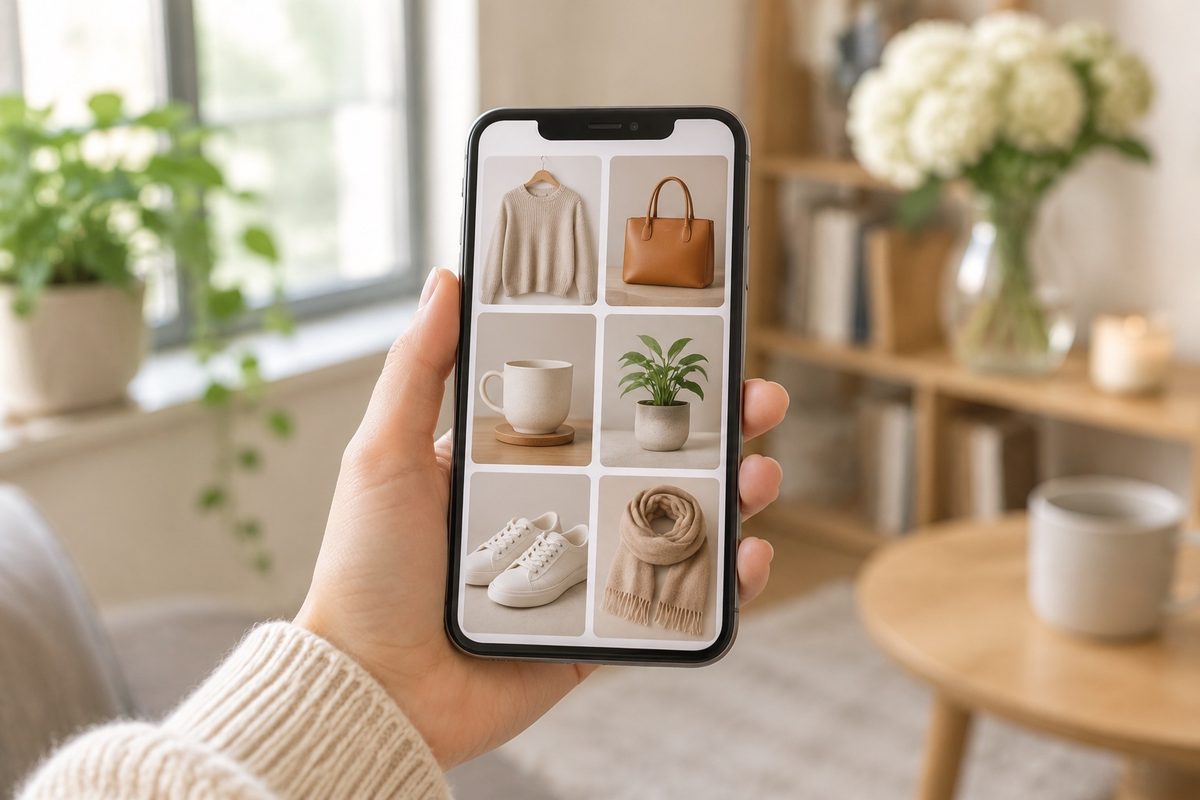
A TikTok Shop photo post accepts up to 35 images in one post, and the platform renders them as a swipe sequence with one frame visible at a time. The number is a limit on what you may attach, not a suggestion of what works.
What matters is that each swipe has to earn the next one. A reader who reaches frame four is doing something the video format does not ask for — they are choosing to continue, repeatedly, with their thumb. That is why photo posts with twenty deliberate frames outperform posts with thirty-five filled ones, and why padding to the limit is the most common way this format dies.
The practical range most sellers land in is nine to eighteen frames for a single product, and up to thirty for a multi-product bundle where each item needs its own detail pass. If you cannot write down what frame eleven is for, frame eleven should not exist.
What the format is for, and how to spend the frames
Photo posts work where the buyer needs to inspect something video cannot hold still: texture, stitching, ingredient panels, the difference between two sizes, how a colour looks under daylight. They are a reading format, and reading rewards detail that a four-second clip rushes past.
Three jobs they do well. First, specification proof — a close frame of a seam, a fabric weave, the crimp on a snack bag. Second, comparison — your 250g next to your 500g, or your product next to the object people already own. Third, objection handling — the review screenshot, the packing box, the return label, the thing a buyer wants to see before trusting a shop they have never bought from.
They do badly at one job: creating desire from nothing. A video can make someone want a product they were not looking for. A still sequence mostly converts people who were already looking. If your goal is reach, this is the wrong format, and no amount of frames fixes it.
Feed the post in the order a hesitant buyer asks questions — what is it, will it fit my use, is it real, what happens if it goes wrong — and give each question one to three frames. Over twenty launches this is the allocation that held up.
| Block | Frames | What it answers |
|---|---|---|
| Open frame | 1 | What this is, in one glance, with the product filling most of the frame |
| In use | 4–8 | Scale and context: hand, table, kitchen, street |
| Detail pass | 3–6 | Texture, seam, label, ingredient panel — the things video blurs |
| Comparison | 2–4 | Two sizes, two colours, or your product beside a familiar object |
| Proof | 2–4 | Review screenshot, packing box, batch date, certification mark |
| Close | 1–2 | The one variant worth starting with, and nothing else |
The open frame is where most of the work is. It gets one slot and it has to survive being seen at thumbnail size next to a moving video. Product large, background plain, no text — the title renders as text underneath anyway, and painting words into the image spends the frame on something the platform already shows.
The close frame is the one people leave out. A sequence that ends on a detail frame feels unfinished; the reader has been led somewhere and then the post just stops. One frame that says “start here” recovers more taps than an extra product shot ever did.
The detail block is usually where a two-person team runs out of material, because nobody shot the seam or the label. DAMI’s product image generation builds those frames from a set of reference photos, which is cheaper than booking a second shoot for six close-ups.
Publishing to several accounts without a spreadsheet
A photo post that has to reach eight or twelve creator accounts is where the manual version breaks. Each account is a separate login, and the sequence has to carry the right product anchor and the right account, or the post goes out pointing at nothing.
DAMI’s publishing screen takes images by drag-and-drop or reads a finished project straight from the creation module, then applies one set of settings across the accounts you pick: post title, product and shop anchors, BGM, and either immediate or scheduled publishing. The sequence is uploaded once. What changes per account is what you tell it to change.
Two limits worth knowing before you plan around it. Publishing runs through TikTok’s official authorisation, so an account that has not been authorised will not appear in the list — that is an authorisation problem, not a publishing one, and it is worth fixing a week before a launch rather than the morning of. And a scheduled post still depends on the account being in good standing; a sequence that clears every check can still be held if the account itself is flagged.
Where photo posts stop working
Two places. The first is categories where the product’s value is motion — anything that pours, stretches, snaps, applies or moves. A still of a sauce packet cannot do what a six-second pour does, and a reader who wanted to see it move will scroll past a sequence of fourteen frames looking for the video.
The second is accounts with no audience yet. Photo posts convert existing attention; they rarely create it. On a creator account with a few hundred followers the format will look like it failed when the real issue is that nobody was there to see it. Putting the same effort into one video and three outreach rounds moves more in that situation.
The honest split for a small team: video for reach, photo posts for the product that people keep asking questions about. If support keeps answering “how big is it” and “is it real leather,” that is a photo post waiting to be built, and it will outperform another video nobody asked for.
FAQ
How many images should one product post use?
Nine to eighteen for a single product. Use the lower end when the product is simple and the upper end when there is a real detail or comparison to show. Stop when you cannot name what the next frame is for.
Can the same sequence go to every creator account?
Yes, with one change per account: the product anchor has to match what that account is allowed to sell. DAMI applies the shared settings once and lets you set that anchor per account. Copying a sequence across accounts without checking the anchor is the fastest way to publish eight posts that point at nothing.
Do photo posts need their own product page work?
They send people to the listing, so the listing has to hold up. A sequence that sells the product and lands on a listing with one bad main image loses the work twice. The pre-publish check on creator content covers what to review before anything goes out.
Start with the block table above and fill it for one product you already sell. If the proof block is empty — no review, no packing shot, no comparison — the photo post is not the thing to fix first; the material is. That is worth doing before the next launch, not during it. Batch publishing across several creator accounts covers the account side; the DAMI publishing and analytics workspace is where the schedule and the resulting numbers sit in the same place, or you can create an account and post the first sequence today.