An Italian fashion brand with ten people and about forty styles, opening on TikTok Shop Italy, sends its first batch of creator invitations and gets a pattern back within a week. Almost nobody says no. Almost nobody says yes either. The replies ask one question in a dozen phrasings: can I see the piece first.
That reply is not stalling and it is not a negotiation tactic. In the Italian market, accepting a commission-only offer from an unknown brand asks a creator to spend her own credibility on a product she has never touched, in a category where the fabric, the cut, and the sizing are the entire product. A photograph and a rate sheet do not answer any of it.
This is written for the fashion brand or small label with 10 to 50 people entering Italy, already selling or about to sell on TikTok Shop, and discovering that the standard US playbook — offer a rate, ship nothing until the video is live — gets read as a red flag rather than as confidence.
Italy as a market: what actually differs from the other EU storefronts
Italy sits alongside Germany, France, and Spain as one of the EU TikTok Shop markets, and the entry mechanics are broadly shared: VAT registration in a market where you hold stock, a local fulfilment and returns capability, a linked TikTok account meeting the follower threshold, and a referral fee in the region of six percent. None of that is Italy-specific.
What is specific is the buyer and the creator. Italian consumers respond to design and provenance more than to discount depth, and the categories that move are the ones where design is the product: light luxury accessories, apparel with a visible point of view, small home pieces, and food with a regional identity. A generic accessory drop sourced on price alone reads as imported, and imported is a disadvantage here in a way it is not in some other markets.
That shapes creator conversations directly. A creator whose audience follows her for taste cannot attach her name to a piece she has not handled, because the audience is buying her judgment rather than the item. The sample is the moment the judgment gets made.
The sample request is a trust test, not a shopping request
Reading the sample request as free-product seeking leads to the wrong response, which is to offer a discount code instead. It is closer to due diligence, and it carries three unstated questions: does the fabric match the photos, is the sizing honest, and will the brand still exist in three months.
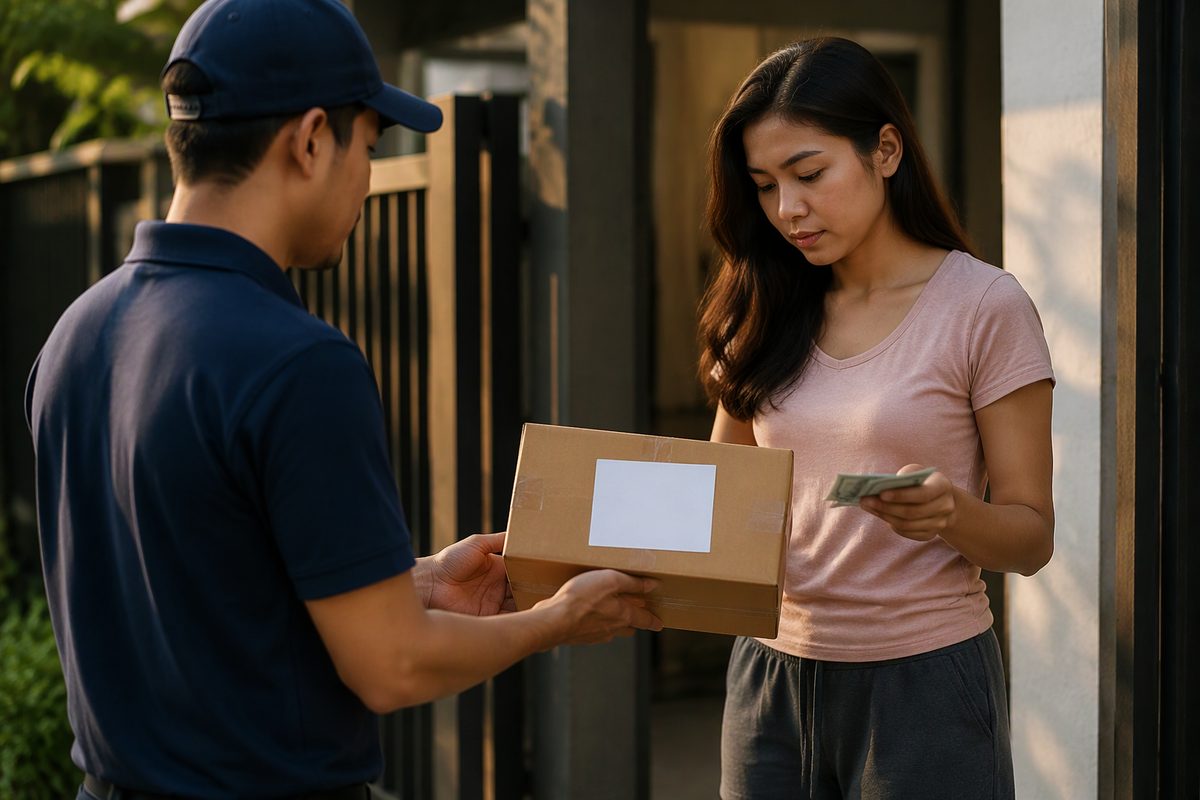
The third is the one brands underestimate. Cross-border storefronts appear and disappear, and a creator who promotes a shop that then goes quiet carries that cost with her audience. A sample in hand, with tracking and a real return address, answers all three at once — which is why a sample-first brand gets read differently from a commission-first one.
The limit worth stating: sample-first does not mean sample-everyone. Brands that get taken advantage of ship to any account with plausible follower numbers, without checking whether it has ever produced product content. Selectivity is what makes the sample a signal rather than a cost.
What a sample-first programme actually costs
The cost is not the unit price of the garment. It is the landed cost of getting one piece to one creator in Italy, and most first-time budgets underestimate the middle lines by a factor of two.
| Cost line | What drives it | Where teams get it wrong |
|---|---|---|
| Unit cost | Your own COGS on one piece | Ignoring that a full outfit often means two pieces |
| Cross-border shipping | Courier tier and weight; two to three weeks by post | Budgeting for the cheapest option, then losing the creator during the wait |
| Duty and import handling | Declared value and the courier’s clearance fee | Marking the parcel as a gift, which puts the creator at risk and sours the relationship |
| Return or write-off | Pieces that are kept, resold, or returned damaged | Assuming a sample comes back in sellable condition |
| Follow-up labour | Message and translation time per creator | Treating this as free because it is not an invoice line |
The practical consequence is a smaller programme than most brands plan. Twenty well-chosen creators with tracked shipping and a follow-up sequence beats sixty parcels sent to a scraped list, and the twenty version costs less once write-offs and labour are counted.
The commission conversation, and why it comes second
Leading with the rate is the most common mistake in this market, and it fails structurally: a rate only means something relative to a sale price and a conversion rate, and the creator has no basis for either until she has seen the piece on herself.
The sequence that works runs in three steps. First contact asks for a look only: brand, category, one line on what makes the piece different, and an offer to send it. Second contact is the parcel arriving with tracking, plus sizing reference, care instructions, and whether returns are accepted if the fit fails. The rate enters third, after she has handled the product and often after she has posted something unprompted.
On rate levels, quoting another market’s percentage is worse than useless, because the price points differ. State the rate as a percentage of the sale price and be explicit about whether it applies to the item, the shipping, or both. Ambiguity there turns a friendly first video into an argument about the payout. Settle one more thing early: whether the sample is a gift, a loan, or returnable. Italian creators ask, and a vague answer reads as a brand that has not done this before.
Language shapes reply speed more than any offer does
An English message in Italy is understood by most fashion creators and answered later than an Italian one. The difference is not comprehension, it is queue position: a message in English sits with the other brand messages from abroad, while a message in Italian reads as a brand that intends to operate here.
The practical minimum is a first line in Italian stating who you are and what you make, then the rest in either language. That one line moves a message out of the foreign-pitch pile. Machine-translating the whole message is worse than one hand-checked line, because the errors are obvious and they undercut the claim of taking the market seriously.
Language fragmentation compounds this, in the same way it does in markets with several working languages: the brand has to decide per creator which language opens the conversation, and guessing wrong costs a week of silence. DAMI’s creator chat translates incoming replies in place and keeps roughly the last 30 days of thread history per creator, so an Italian reply gets read and answered the same day rather than waiting for a translator — the difference between a conversation and a queue.
Building the first twenty-creator list
Twenty is the right first number: large enough to learn from, small enough that every parcel is tracked personally. Mid-tier accounts are the efficient band — very large creators negotiate hard and often do one paid post, while creators in the tens of thousands are likelier to build the repeat relationship a small brand needs.
Start with audience location rather than follower count. A creator with 40,000 followers concentrated in Italy converts better than one with 200,000 spread across Europe, because the storefront serves Italy and a slow delivery to a German follower is a bad first experience. Filter for market, then category match, then whether the account has posted product content before.
Before that, the list has to exist in usable form. DAMI’s creator filtering works from an eight-million profile pool with follower tiers across six bands and market selection, and saves the filtered set as a named resource group. The sample workflow sits beside it: DAMI’s sample workspace tracks which creator has which piece and when it landed, and the automatic sample review step means a request meeting your criteria does not wait for a human on a Sunday.
For the outreach itself, pacing keeps the account intact. Fifty invitations in ten minutes is the fastest way to have a new account treated as bulk behaviour. DAMI’s bulk outreach runs in groups of ten to one hundred with a one-to-five-second gap between invitations — slow enough to look human, fast enough that twenty creators take a morning.
Timing: the two calendar facts that decide your launch month
Italy has a holiday pattern that catches foreign brands every year. August is largely closed: many small businesses shut for two to three weeks around the middle of the month, and creators travel. A launch in the first week of August produces parcels sitting in a building nobody checks and replies arriving in September, when the sample is stale.
The second fact is transit time. A sample from China to Italy takes two to three weeks, longer in November and December. Working backwards from the launch date is not optional: the parcel has to leave about a month before the content is needed.
The limit to accept: with that transit time, a sample-first programme cannot be reactive. It will never let you ride a trend in the week it appears. What it builds is a roster that posts on its own schedule, which is the only version of this that survives twelve months.

FAQ
Is a VAT number required to sell on TikTok Shop Italy?
For cross-border selling into the EU storefronts you need VAT registration in a market where you hold stock, alongside a business licence and a local fulfilment and returns capability. Confirm the current requirements on the seller platform before planning, because they change.
Do Italian creators accept commission-only deals?
Some do, usually the ones who already know the brand. For a brand nobody has heard of, a commission-only first message is read as low commitment. The sample is what changes the answer.
What should I send with the sample?
A sizing reference, care instructions, and a note on whether the piece is returnable. A tracking number sent the day it ships prevents the most common follow-up question.
How long should I wait before following up?
Once the tracking shows delivery, wait three or four days, then ask a specific question about the fit rather than whether they liked it. A fit question is answerable and starts the real conversation.
Does this work for categories other than fashion?
The sample-first logic holds wherever the product’s quality is not visible in photos: textiles, leather goods, anything where feel decides the sale. It matters less for accessories where the photo is the product.
What to fix before the first send
Three things, in order. Fix the size chart so a creator can answer her own sizing question without messaging you. Fix the shipping tier so the parcel arrives in two weeks rather than four, because the wait is where creators get lost. Fix the first line of the message so it is in Italian and names the piece.
Everything else here is downstream of the sample arriving in a condition that makes the creator want to post. If the piece arrives creased in a bag with a customs fee attached, no rate negotiation recovers the relationship, and the twenty-creator programme becomes twenty polite no-replies.
If the wider European entry sequence is still being built, the first-outreach playbook for TikTok Shop Europe covers what Germany, France, and Spain share, and Italy inherits most of it. What does not carry over is the sample expectation.
Start in the DAMI workspace by filtering the pool to Italy and saving twenty names, then send five tracked samples before committing to a larger order. Five tracked parcels teach you more here than fifty untracked ones.